Water Quality Testing for Clinics in Oman: A Practical 2026 Checklist
Water quality testing for clinics in Oman is a practical part of safe facility management. A clinic depends on water for handwashing, cleaning, drinking points and, where relevant, equipment processes. The quality that arrives at the final outlet can be affected by the source, storage tank, internal plumbing, low-use outlets and point-of-use treatment.
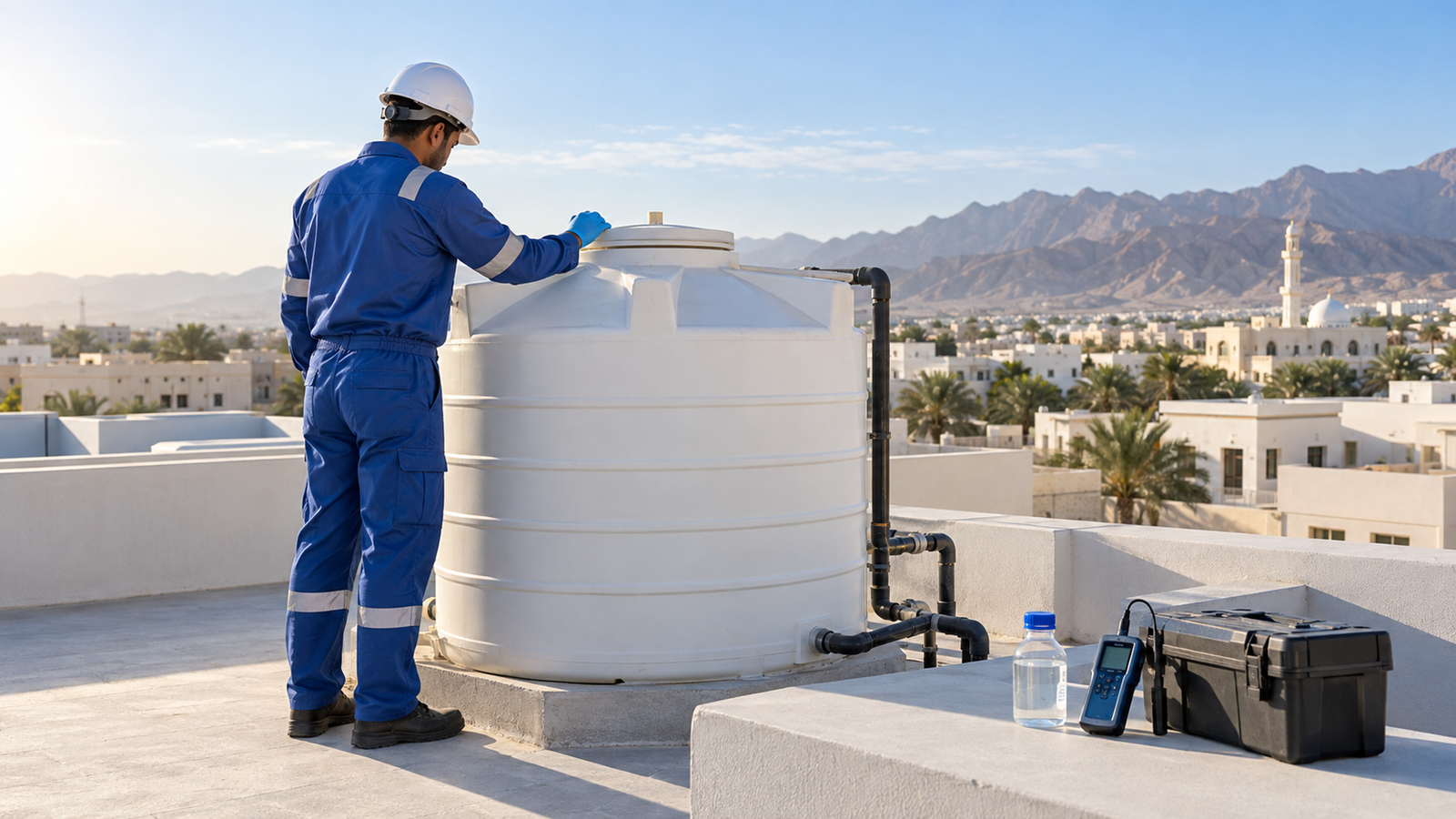
Why water quality testing for clinics in Oman matters
Testing gives a clinic evidence rather than assumptions. A clear programme helps a responsible team investigate a complaint, verify corrective action after tank cleaning, and document routine checks. The Oman Ministry of Health has published national standard operating guidance for water quality in healthcare facilities; each clinic should follow the requirements and risk controls relevant to its licence and services.
1. Start with a site risk review
Map the water journey from the incoming connection through tanks, pumps, filters and distribution lines to representative outlets. Identify low-use rooms, staff pantry taps, treatment units and any outlet used for patient-facing activity. Record recent plumbing work, long closure periods, tank repairs, taste or odour reports and filter changes.
2. Choose sampling points before testing
A laboratory result only makes sense when the sample point is recorded. A sensible plan may include the incoming supply, tank outlet, a representative clinical outlet and a drinking-water point after treatment. Use clean approved bottles and follow the laboratory instructions for flushing, disinfection of the tap where required, labelling and sample transport.
3. Match test parameters to the risk
Your consultant or laboratory can recommend the appropriate microbiological, physical and chemical parameters. The correct panel depends on the purpose of the water and the local risk assessment. Avoid treating one generic test as proof that every outlet and every future condition is safe. Water quality testing for clinics in Oman should be planned, traceable and reviewed.
4. Inspect storage and internal plumbing
Water testing does not replace maintenance. Check the tank cover, overflow protection, sediment, access points, float valve and cleaning records. Inside the clinic, look for dead-end pipework, leaks, corroded fittings and outlets that have not been used recently. Address these before repeating a sample, otherwise the underlying cause may remain.
5. Maintain treatment equipment
Where a clinic uses RO, UV or point-of-use filters, keep service dates, replacement intervals and sanitisation records. A filter is not a fit-and-forget product. The right configuration depends on incoming water, flow demand and intended use. Read our guide to hard water in Oman when scale and mineral load are part of the problem.
6. Respond to an unsatisfactory result
Do not rely on guesswork. Isolate or restrict a relevant outlet when the risk assessment requires it, investigate the tank and plumbing route, complete corrective work, then retest according to professional advice. Keep the result, actions taken, dates and responsible person in the clinic’s maintenance record.
7. Set a review calendar
Review the programme after changes in occupancy, renovation, a long shutdown, tank contamination or a repeated complaint. Planned water quality testing for clinics in Oman is more useful than a one-off response because it connects testing, maintenance and accountability.
Frequently asked questions
How often should a clinic test water?
Frequency should follow the clinic’s risk assessment, applicable health requirements, water system condition and services offered. A specialist can help define a suitable schedule.
Is tank cleaning enough?
Tank cleaning supports storage hygiene, but it does not test the final water quality or correct all internal plumbing issues.
UV Water Systems can assess your clinic’s storage, treatment and sampling needs. See the Oman Ministry of Health water-quality guidance for official context.
For reliable water quality testing for clinics in Oman, connect sampling results with maintenance records, responsible staff and clear follow-up dates. This makes the process useful for day-to-day clinical operations.