PAC Powder Oman: 7 Essential Water Treatment Checks
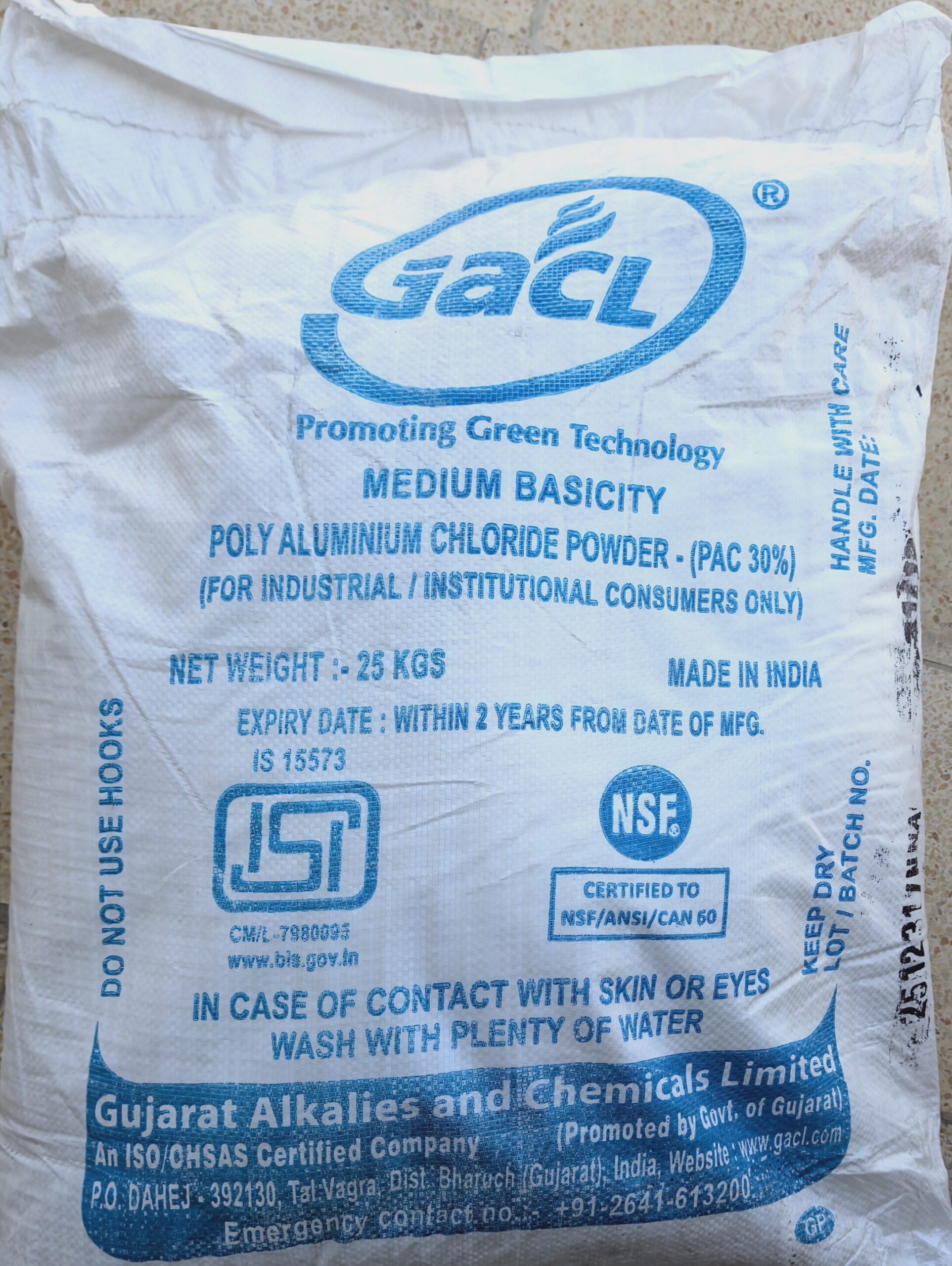
PAC powder Oman buyers need more than a bag of chemical: they need a coagulant that matches their source water, treatment equipment and operating targets. UV Water Systems lists GACL Poly Aluminium Chloride PAC 30% Medium Basicity in 25 kg bags for customers in Muscat and across Oman. This guide explains what PAC does, where it fits into a treatment process, and what to check before ordering.
1. What is PAC powder?
Poly aluminium chloride, commonly abbreviated to PAC, is an aluminium-based coagulant. In a correctly designed clarification process, coagulation helps destabilise fine suspended particles that would otherwise remain dispersed in water. Mixing and flocculation then encourage these particles to form larger flocs that can be separated by suitable settling or filtration equipment.
PAC should be selected as part of a complete treatment process. It does not replace disinfection, reverse osmosis or every other treatment stage. Clear-looking water also needs appropriate testing before anyone describes it as suitable for drinking or a particular industrial application.
2. PAC powder Oman: product details to check
The linked product is GACL PAC 30% Medium Basicity, manufactured in India and offered in a 25 kg bag. The manufacturer describes PAC powder as acidic and hygroscopic. Buyers should request the current technical data sheet, safety data sheet and batch certificate of analysis to confirm the supplied grade and its suitability.
The trade designation “30%” should not be confused with a ready-to-dose solution concentration. Confirm how the manufacturer expresses the product specification and how your plant defines its dosing calculations. Medium basicity and high basicity grades are different products; they should not be substituted without a technical review.
3. Where can poly aluminium chloride be used?
Potential applications include clarification of raw water, treatment of industrial effluent and selected wastewater processes. Actual performance depends on the water chemistry, contaminants and equipment. A plant treating variable industrial discharge may require a different programme from a system handling relatively stable raw water.
For PAC powder Oman projects, start by identifying the intended result: reduced turbidity, improved settling, support for downstream filtration, or another measurable treatment objective. Then establish which parameters will demonstrate success. Avoid assuming that one chemical will solve dissolved salts, hardness, microorganisms and suspended solids at the same time.
4. How should the dose be selected?
For PAC powder Oman applications, there is no universal dose for every site in Oman. Use representative water samples and a controlled jar test to compare candidate doses and operating conditions. Record the initial water quality, chemical strength, mixing sequence, settling behaviour and final test results so that the selected programme can be repeated.
Qualified operators should translate the test result into a plant dosing rate using the measured water flow and the prepared solution strength. Verify the dosing pump output instead of relying only on its dial setting. Recheck performance after a change in water source, flow, turbidity or chemical batch, and investigate poor results before simply increasing the feed rate.
5. What equipment and handling arrangements matter?
A PAC powder Oman installation needs suitable chemical preparation, mixing, metering and process monitoring. Check the compatibility of tanks, agitators, pump components, seals and pipework against the chemical supplier’s instructions. Provide a clear operating procedure that identifies preparation steps, inspection points and responsibilities.
Keep the original packaging properly closed and protect it from moisture according to the current safety data sheet. Use the prescribed protective equipment and follow the site’s spill and first-aid procedures. Chemical storage, solution preparation and dosing should be managed by trained staff. Do not mix PAC with other chemicals unless a documented procedure specifically permits it.
6. What should procurement teams ask?
- Is the quotation for the correct manufacturer, grade and bag size?
- Are current technical and safety documents available?
- Does the batch documentation match the delivered material?
- Has the proposed grade been evaluated with the actual water?
- Are stock availability, delivery arrangements and commercial terms confirmed?
For potable-water applications, verify the exact product approval, intended use and any applicable limits before purchase. A statement on a website is not a substitute for checking valid documentation for the material being supplied.
7. Request PAC powder in Muscat, Oman
Visit our poly aluminium chloride product page to enquire about PAC powder Oman supply. Share your application, required quantity, water analysis and existing treatment arrangement so the enquiry can be reviewed with useful technical context.
UV Water Systems can discuss your enquiry in Muscat and help identify the product information needed for your project. Confirm current availability and pricing before placing an order. For manufacturer information, consult the GACL poly aluminium chloride technical brochure alongside the current documents supplied with your quotation.
Frequently asked questions
Is PAC the same as powdered activated carbon?
No. Here PAC means poly aluminium chloride, a coagulant. Powdered activated carbon is a different material used for adsorption. Always state the full chemical name when requesting a quotation.
Can PAC be added directly to a household filter?
This product is intended for controlled water-treatment processes. It should not be added casually to a domestic filter or drinking-water tank. Ask for a treatment assessment appropriate to the application.
Does a 25 kg bag have a fixed treatment capacity?
No. The treated volume depends on the validated dose and the water conditions. Determine consumption from testing and operating records rather than a generic bag-capacity claim.