Hypochlorous Acid Generator in Oman | 5 Selection Steps
A hypochlorous acid generator in Oman can produce HOCl solution on site for a defined process. Selecting one starts with three values: the solution flow in litres per hour, the available chlorine concentration, and the acceptable pH range. Xiaoya’s wall-mounted AQ-P100-4G and salt-fed XY SAEW-50 illustrate why those values should be compared together. This guide explains the manufacturer’s reference figures and what to confirm before ordering.
How a hypochlorous acid generator in Oman fits your process
Hypochlorous acid (HOCl) is a chlorine species in water. A hypochlorous acid generator in Oman uses electrolysis to produce a solution at the site. The AQ-P100-4G uses a hydrochloric acid electrolyte feed. The XY SAEW-50 uses salt and purified water with membrane electrolysis. Those different feed arrangements affect the space, utilities and service access the project requires. In either case, define the intended application and how the finished solution will reach the point of use.
1. Compare flow, chlorine concentration and pH
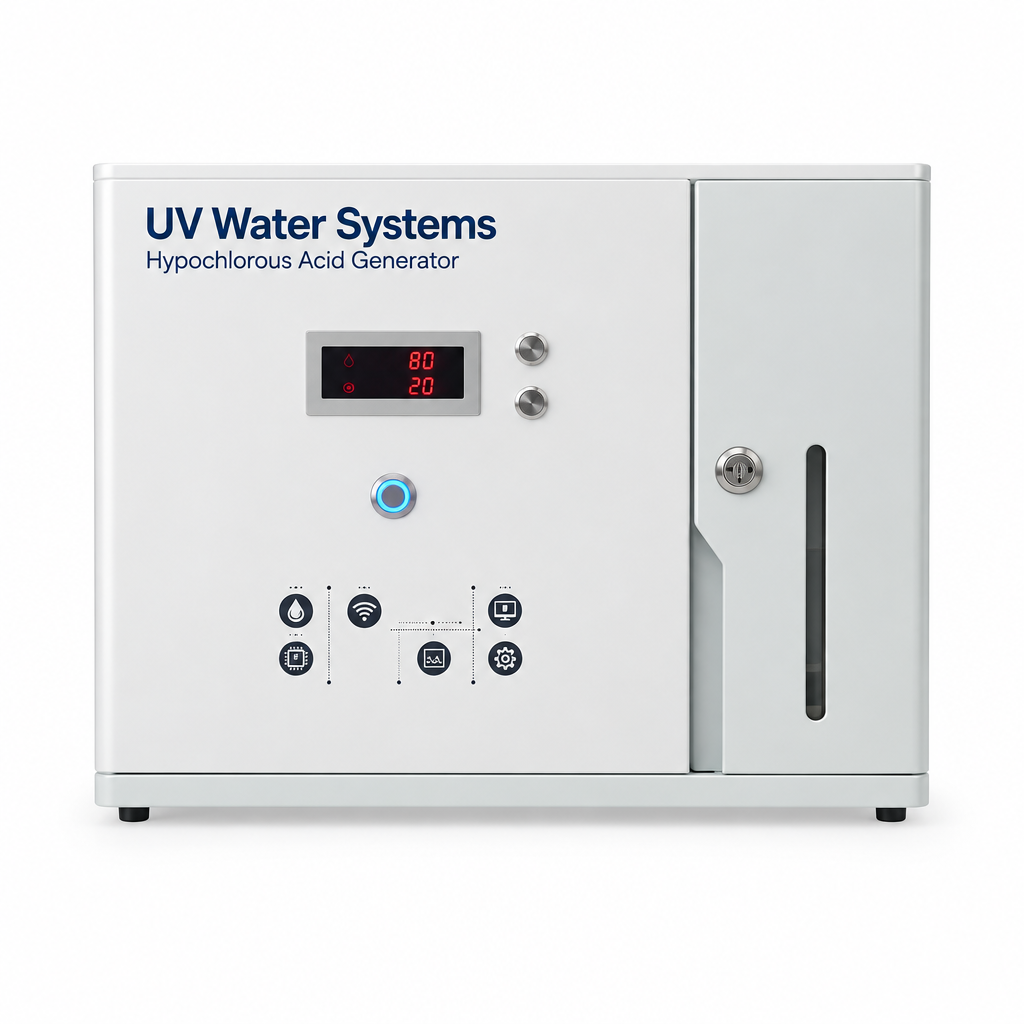
The AQ-P100-4G HOCl Generator has separate manufacturer reference ranges of 60–120 L/h solution output and 10–80 ppm available chlorine (FAC). Its reference pH is 5.0–6.5, and inlet water quality can affect actual pH. Ask Xiaoya to confirm the flow and concentration you need as a pair. For example, a project that requires 120 L/h at 80 ppm should have that operating point confirmed before purchase.
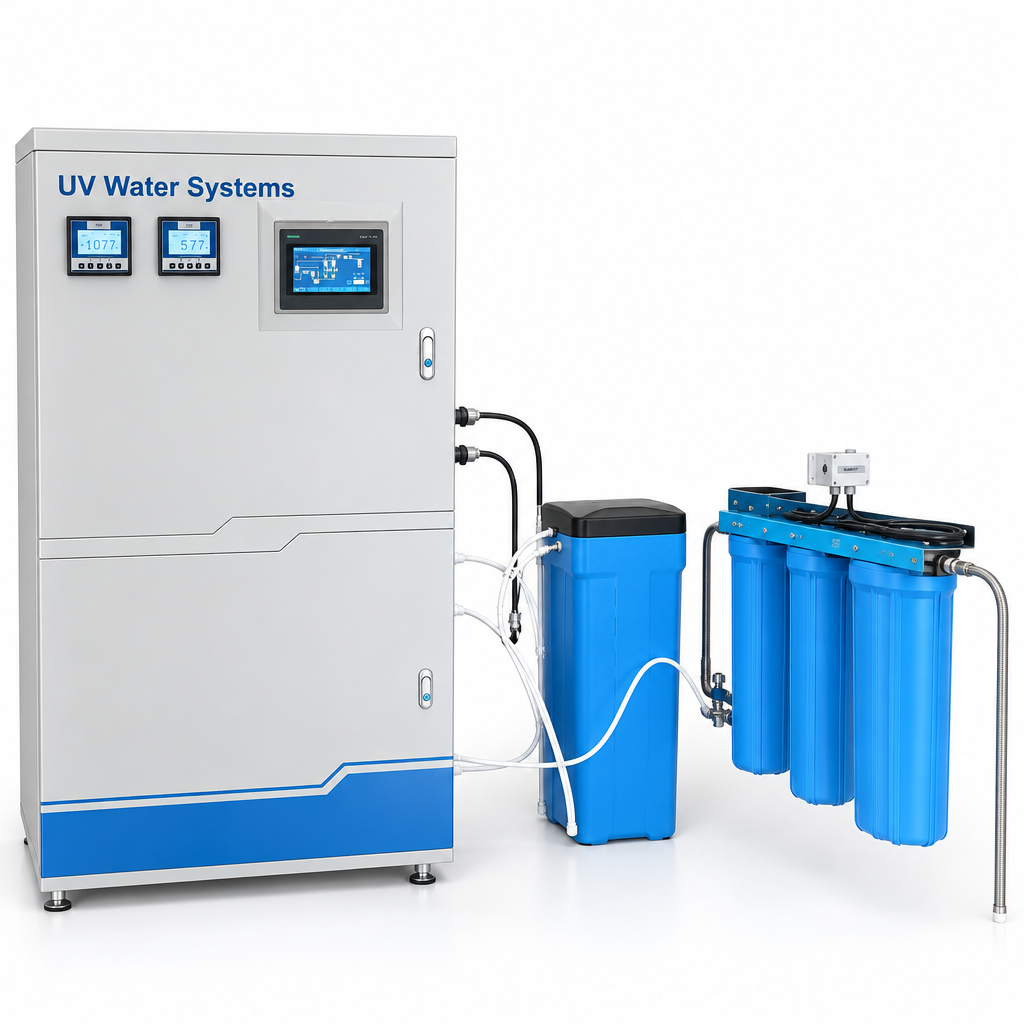
The XY SAEW-50 Salt-Fed HOCl Generator is a 50 L/h reference configuration with 500 mg/L available chlorine and a reference pH of 5.0–6.5. This is a different output and concentration from the wall-mounted model. Use the process requirement to decide which reference is closer, then have the proposed configuration and acceptance values confirmed in writing.
2. Check utilities and the installation footprint
For the AQ-P100-4G hypochlorous acid generator in Oman, Xiaoya lists the cabinet at 500 × 380 × 190 mm. Its electrical specification is 220 V AC, 50 Hz and 170 W, with a 0.15–0.25 MPa inlet pressure range. It has a 1 L electrolyte reservoir and ruthenium–iridium coated titanium electrodes. The published cell life is at least 5,000 operating hours. Leave space for connections and service and confirm the water quality and electrolyte handling arrangements before fixing the location.
The XY SAEW-50 reference cabinet is 600 × 520 × 1,430 mm. Xiaoya lists 1.3 kW rated power and 0.2–0.3 MPa inlet pressure. Confirm the electrical supply for the offered configuration and allow space for water preparation, brine equipment, drainage and maintenance. Ask for the installation drawing before settling the room layout. When water arrives from a site tank, document the supply arrangement and expected pressure at the generator.
3. Size storage and delivery for a hypochlorous acid generator in Oman
Build a daily demand profile before choosing tank and pump sizes. Write down when each area draws solution, the likely simultaneous demand, and how long the generator can run between draws. A process that uses most of its volume in one short shift has different delivery requirements from one with steady demand over the day. Define the required solution quality at the point of use, since storage and transfer are part of the overall system.
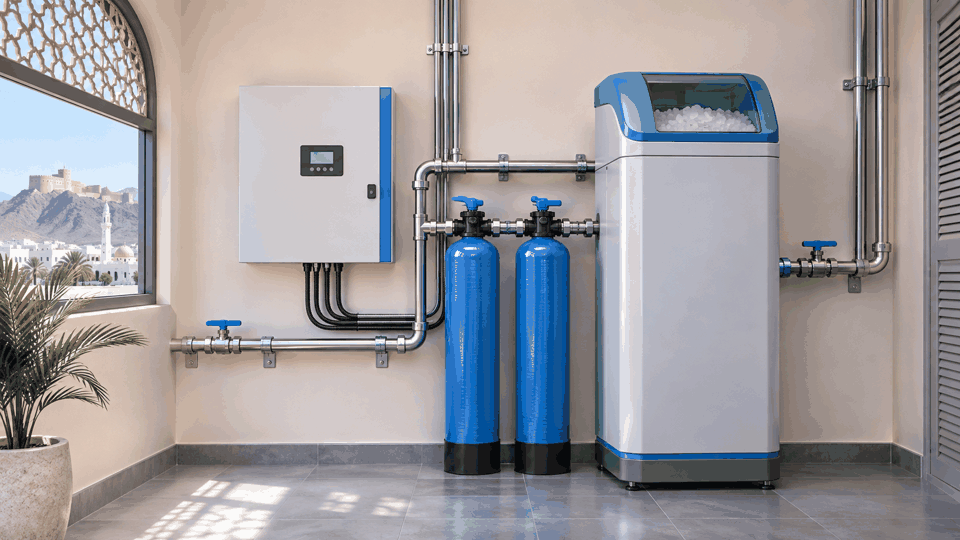
The scope for a hypochlorous acid generator in Oman can include water pretreatment, a brine tank, solution storage and a transfer pump, depending on the configuration. Ask the project team to itemize these components, pipework and customer-side works. The AQ-P100-4G lists remote control as an optional 4G configuration. If remote operation is needed, confirm network compatibility, access arrangements and exactly which functions are included.
4. Set commissioning and maintenance expectations
When commissioning a hypochlorous acid generator in Oman, agree on a check for solution flow, available chlorine and pH at the same operating point. Specify where samples will be taken, the measurement method and the source-water conditions used for the check. Ask for the operating manual, parts list, operator training scope and maintenance schedule. If the equipment is intended for a regulated use, verify the applicable approval and documentation for that use before deployment.
5. Request a quotation for your site
When requesting a quote for a hypochlorous acid generator in Oman, send your site location, intended application, daily and peak demand, target available chlorine and pH, inlet water analysis, and available space and power to UV Water Systems. For a project quotation in Muscat or elsewhere in Oman, indicate whether you need water preparation, storage, distribution, remote access or commissioning. The Xiaoya AQ-P100 series data and the Xiaoya salt-fed references provide the published model specifications.
Frequently asked questions
Can I compare the two machines just by litres per hour?
Compare flow against the required available chlorine and pH, then review the installation. A higher volume per hour may describe a solution at a different concentration. Equipment selection should start from the performance your process requires.
Does the XY SAEW-50 package include water treatment and storage?
Xiaoya treats those items as project-dependent. Confirm the exact package, any site-side water treatment and how the finished solution will be stored and delivered on the quotation.
How to compare two quotations on the same basis
Ask suppliers of a hypochlorous acid generator in Oman to quote against one set of project conditions. List the planned inlet water source, the minimum pressure available during peak demand, the required outlet flow and the target chlorine concentration and pH. State whether the values apply at the generator outlet, after storage or at the final point of use. If the quotation covers several possible configurations, ask the supplier to identify which one meets the stated conditions. A short table of guaranteed values can make the comparison clearer than a list of maximums.
Separate equipment supply from the work required to make it operational. The scope might include a generator, an upstream treatment package, tanks and a transfer pump. Electrical work, pipe routing, testing, operator training and future service can be separate line items. When the supplier proposes a change to the plant room, request a drawing showing the cabinet, service clearances and connection points. This helps the contractor price the same works that the supplier has allowed for.
What to include in a site survey in Oman
Identify the route from the incoming water supply to the generator and from the cabinet to the point of use. Note whether pressure changes when other equipment starts. Provide a recent source-water analysis if there is one, and identify the type of supply, such as a building tank or a treated process-water line. For a hypochlorous acid generator in Oman, the equipment supplier can then confirm whether the proposed inlet water needs additional preparation and what space should be reserved.
Record the wall or floor space that can actually be used, including doors, columns and existing services. Show how equipment can be brought into the room and how the operator can reach consumables and service panels. Check the available power connection against the quoted model. The AQ-P100-4G has a published voltage and frequency, while the electrical supply for the offered XY SAEW-50 package should be confirmed in the quotation. Include the planned location of drains and any proposed tank in the sketch.
What to document at equipment handover
For a hypochlorous acid generator in Oman, agree on a record of the model and serial number, the supplied accessories and the installation drawing. At start-up, ask the commissioning team to record inlet water conditions and the flow, available chlorine and pH of the solution at the agreed sampling point. If the site includes storage and distribution, agree in advance whether acceptance also requires measurements at a downstream location. Record the measurements, the methods and the operating conditions together so a later service team can interpret them.
Ask who will explain the controls to the operator and who will handle routine consumable replenishment, inspection and service. The maintenance schedule should come from the manufacturer for the supplied equipment. Ask which parts the supplier can provide locally, which parts have a lead time and how service requests are made. For the AQ-P100-4G, ask how operating hours for the electrolytic cell are recorded. For the XY SAEW-50, ask which water preparation and brine components are included in the maintenance documentation.
Common project decisions
When does a compact wall-mounted cabinet make sense?
Consider the AQ-P100-4G when a wall-mounted installation fits the site and the required operating point falls within a combination confirmed by the manufacturer. Review the choice with the project team if the process needs a separate tank or pump, or if the installation area leaves little room to reach the reservoir and service connections. Make the decision after checking the whole installed footprint.
When should a salt-fed system be evaluated?
Consider the XY SAEW-50 when the project calls for salt-fed membrane electrolysis and its reference flow and available chlorine are close to the process requirement. Check the arrangement for purified water, brine preparation and service access before pricing. The manufacturer also documents a separate 100 L/h configuration. If demand exceeds the 50 L/h reference, confirm the scope and operating values of the next configuration with the supplier.
Can one generator serve multiple areas?
A hypochlorous acid generator in Oman can be evaluated as a central system. List each area’s peak requirement, the times when several areas operate together and the routing distance from the proposed equipment location. A central system may need a dedicated storage and delivery package. Ask the project team to define the equipment boundary and tell you where solution quality will be measured at acceptance.
What if the installation will expand later?
Give the supplier separate estimates for initial and future demand. Confirm whether the room can accommodate a larger cabinet or additional tank and whether water, electrical and drainage connections have capacity for an expansion. Ask which parts of the first-stage installation could still be used so the quotation distinguishes immediate needs from future provision.
Start with a short project brief
A one-page brief can capture the decisions that set the scope for a hypochlorous acid generator in Oman. Include the selected process, a table of minimum and peak demand, space for utilities and the acceptance criteria. Ask your purchasing and operations teams to review it together before ordering. Where the process may change, state which figures are known and which are forecasts. A clear brief also helps the supplier identify information still needed to quote the generator and the associated equipment.
For the Arabic version of this article, see مولد حمض الهيبوكلوروس في عمان.