Self Cleaning Filter for Irrigation in Oman: 5 Sizing Checks
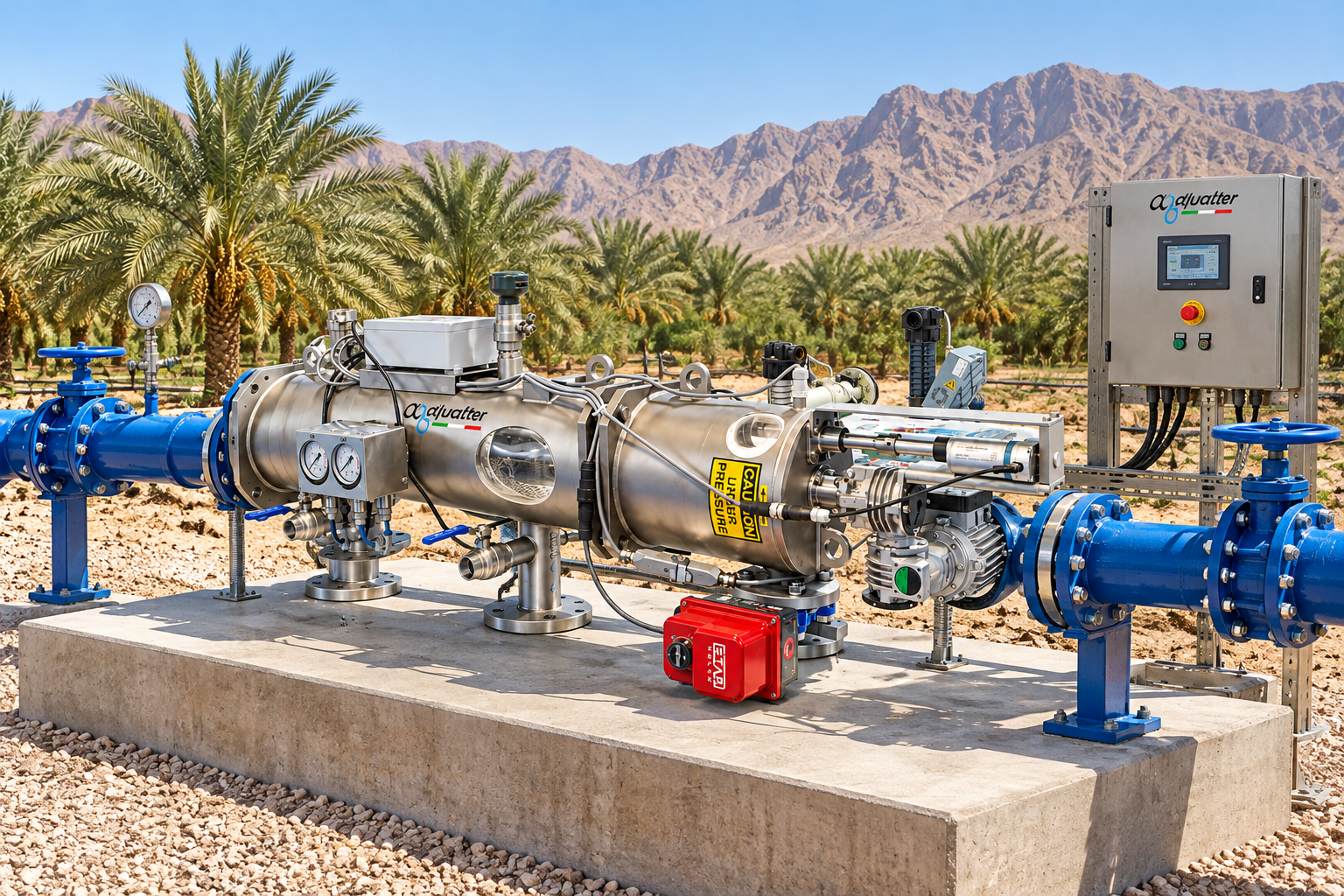
A self cleaning filter for irrigation helps protect drip emitters, sprinkler nozzles and control valves from suspended particles. For farms, nurseries and landscape projects in Oman, choosing an automatic screen starts with the water source, the emitters and the conditions at the filter during flushing. This guide uses the Alfa Water ABV irrigation filter to show what to check before requesting a quotation.
How a self cleaning filter for irrigation works
The ABV combines mechanical brushing and suction cleaning. As particles accumulate on the screen, the brushes loosen coarser material. When the drain valve opens, suction pads collect finer solids and discharge them with the flush water. Alfa Water says filtration continues during cleaning. Ask the supplier to confirm the pressure and flow available at the irrigation header during flushing for your proposed model.
Where a farm irrigates in several zones, compare the flushing cycle against the way those zones run. The filter is part of the hydraulic system, so pump operation, the pressure needed by the emitters and the available drain route all matter. Choose the filter and the installation arrangement together.
Alfa Water offers the ABV and AVC for irrigation applications. The ABV uses both brushes and suction and is the model highlighted for source water with coarser suspended solids. Review the ABV manufacturer specifications and the Alfa Water irrigation application guide alongside the project requirements.
1. Identify what is in your irrigation water
A borewell, an open reservoir and a treated-water line can put very different loads on a screen. Ask whether the borewell carries sand or sediment when the pump starts. If the intake is a reservoir or other open source, note seasonal algae, organic debris and periods of cloudy water. A sample from a quiet day may miss the conditions that cause most flushing cycles.
For a self cleaning filter for irrigation supplied by treated sewage effluent, give the supplier the water-quality information and planned irrigation use. The screen captures suspended solids within its filtration range. Dissolved salts, microbial quality and the suitability of reclaimed water for the intended use need their own assessment.
2. Match the screen to the emitters
Start with the dripline or nozzle manufacturer’s required filtration grade, expressed in microns. A lower micron number means a finer opening. A finer screen can collect more material, which can increase flushing frequency or pressure loss if the incoming solids load is high.
Alfa Water cites 50–200 µm in its general ABV and AVC irrigation guidance and shows 100–200 µm ABV screens in an example with elevated surface-water solids. Its full ABV catalog spans 10–1,000 µm across different screens. Use those figures to frame the discussion and give the supplier the actual emitter requirement. If the water carries substantial sand, fibrous debris or algae, ask whether a separate first stage is appropriate.
3. Calculate the peak flow through the filter
List the irrigation zones and record the flow for each. The design flow is the combined demand of the zones that run at the same time. For example, two zones that run together at 12 and 18 m³/h require 30 m³/h at the irrigation header. Give the supplier that flow and the planned sequence so they can account for the filter’s cleaning requirements in the selection.
The ABV catalog lists up to 1,850 m³/h across the range and flanged connections from 2 to 16 inches. A single model’s capacity depends on its screen and operating conditions. Ask for the selected model’s flow data at your screen grade, together with the expected pressure loss at project flow.
4. Check pressure during filtration and cleaning
Record the lowest inlet pressure while the required zones are operating. The available pressure at the filter can differ from the pump discharge pressure because of the elevation and upstream pipe losses. Note the downstream pressure that the valves and emitters need, especially in the furthest or highest zone.
Ask the supplier to state the clean-screen pressure loss and minimum flushing pressure for the quoted unit. Confirm which pressure values the controls will use and how the operator will see that the filter has resumed its normal condition after the cleaning cycle. For a retrofit, tell the supplier where readings were taken and which valves were open.
5. Plan the drain, controls and service access
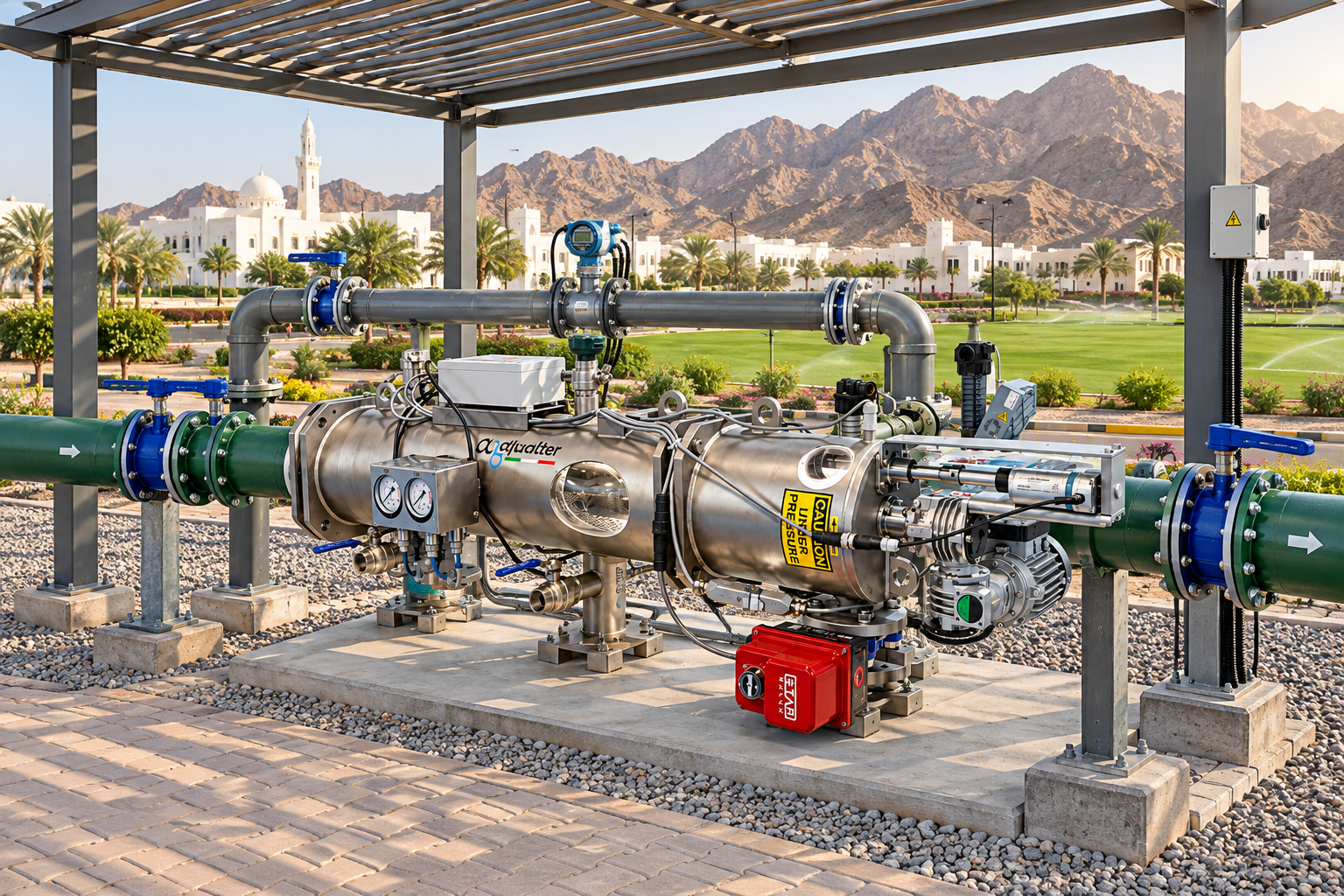
Show where the flush water can discharge and include the route in the project scope. Check that the equipment has room to open the housing and remove the screen for inspection. A compact layout can be difficult to service if pipework or walls block the access required to remove parts.
Ask the supplier to identify the controls, electrical connection, drain valve, gauges and any items that must be supplied by the site. Name who will monitor the filter, where replacement parts will come from and who will provide the commissioning and operator training.
What to record at commissioning
Record the model and screen grade actually installed. With the agreed zones running, note the flow, inlet pressure and downstream pressure with a clean screen. Observe a cleaning cycle and compare the header pressure and the drain operation with the agreed criteria. Save the reference readings with the installation drawings and the controls documentation.
During routine service, compare readings at similar flows. A change in flushing frequency can be investigated against the source-water conditions, drain performance and screen condition. Use the manufacturer’s instructions for inspection, cleaning and replacement intervals.
Frequently asked questions
Can a self cleaning filter for irrigation replace a sand separator?
That depends on the size and load of the incoming solids. If a borewell regularly delivers sand, give the supplier details of the quantity, particle size and when the sand appears. Ask whether a separate sand separator would reduce the load on the screen. For water with algae or organic matter, the treatment sequence may be different. Ask for the proposed arrangement and which unit removes each type of material.
What should the supplier confirm before you order?
Request the selected screen opening, flange size, clean-screen pressure loss, minimum flushing pressure, cleaning water requirement and control scope. Check that the quotation identifies the exact ABV model and whether it includes startup support and spare parts. If normal irrigation must continue during a flush, state the minimum flow and pressure needed at the irrigation header and ask the supplier to confirm both.
Can the same filter serve drip irrigation and sprinklers?
A shared filter can be evaluated if it meets the filtration requirement of both branches and can handle their maximum simultaneous flow. Give the supplier each branch’s emitter specification and operating schedule. Where branches use different water sources or require substantially different filtration grades, ask for a comparison of a shared unit and separate filtration before choosing the layout.
Request an irrigation filter quotation in Oman
Share the project location, water source, peak combined flow, lowest inlet pressure, emitter type, target micron rating, pipe size and proposed flush drain with UV Water Systems. If you have a pump curve, a water analysis or the emitter datasheet, include it so the quoted model can be checked against your system.
See the Self Cleaning Filter for Irrigation product listing for the ABV range and enquiry details. Read the Arabic guide for the same selection steps.