Oman Water Treatment Market 2026: Demand, Investment and Growth Segments
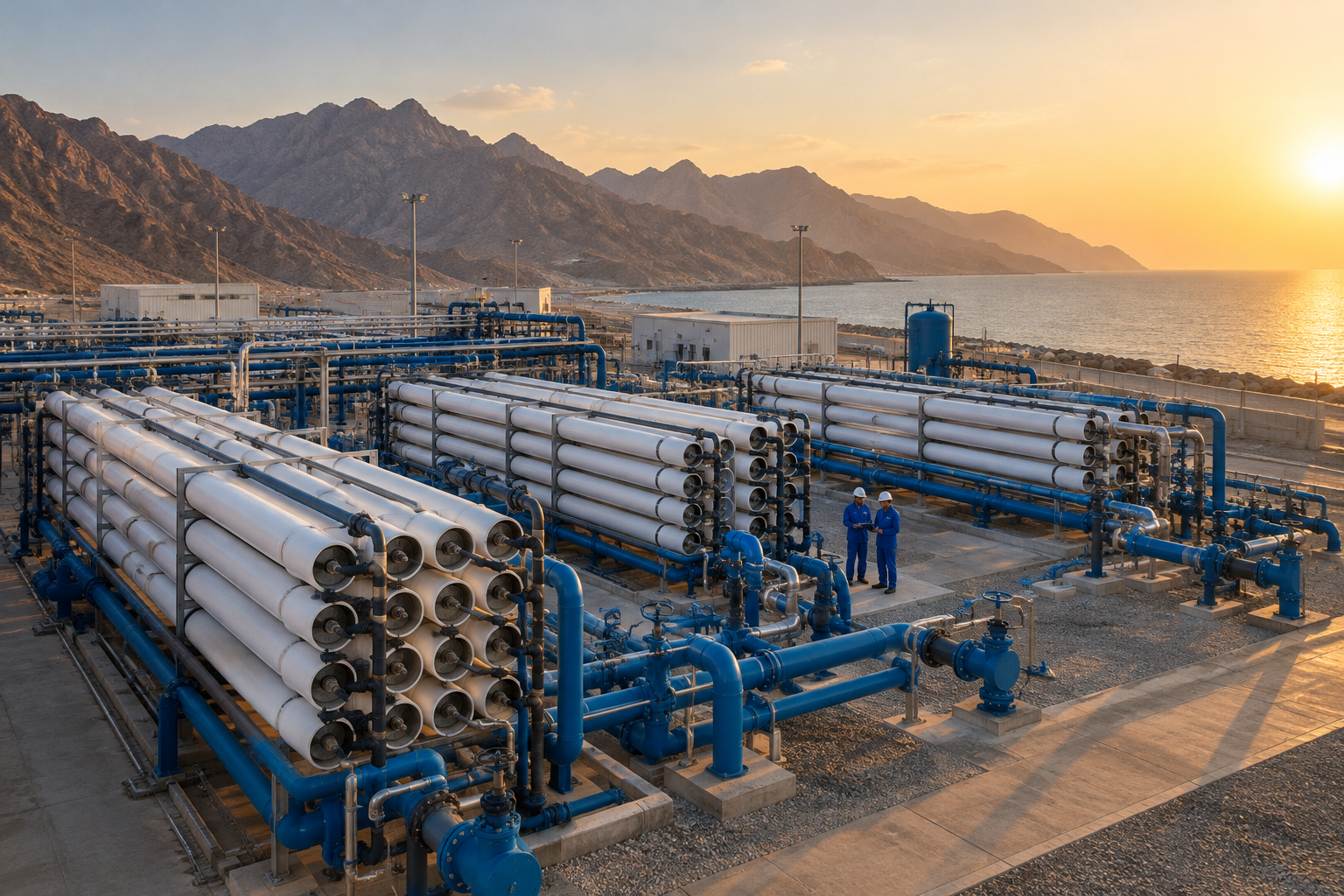
The Oman water treatment market is growing for one simple reason: almost every litre of drinking water in the country has to be produced, not just pumped. Rainfall is low, aquifers are under pressure from salinity, and the population is expected to double over the next 25 years. This article sets out what the public numbers say, which segments are growing, and what buyers in Oman should plan for in 2026 and beyond.
Oman Water Treatment Market: The Numbers Behind the Demand
Nama Water Services (NWS), the state-owned water utility, published a clear picture of the national system at Water Majlis 2025:
- About 1.41 million m³/day of installed water production capacity
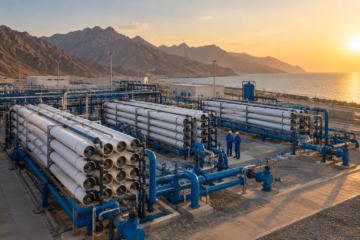
- 61 desalination plants, 865 wells and 922 reservoirs and tanks
- More than 26,200 km of water network serving roughly 754,000 customers
- 58 sewage treatment plants serving about 226,000 wastewater customers
- Non-revenue water down from 47% in 2021 to about 33%, with targets of 21% by 2030 and 10% by 2040
On the investment side, NWS has outlined an estimated OMR 11 billion capital plan to meet water demand through 2050. For 2025 to 2027 alone, it plans OMR 666 million of capex covering more than 225 projects, including 28 new sewage treatment plants and over 8,000 km of new water pipeline. Water network coverage is targeted to rise from 73% to 96% by 2040, and wastewater coverage from 29% to 75%.
Segments Driving Growth
1. Desalination and brackish water RO
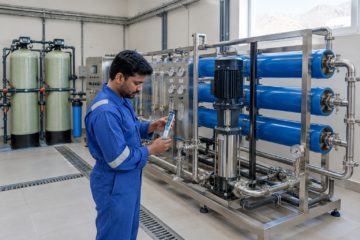
Large seawater plants are built by the state through long-term contracts. Below that level there is steady demand for small and mid-size reverse osmosis plants: hotels, worker camps, farms, mining sites and remote villas that sit on brackish wells. Many of these sites are outside the network today or need a backup supply. Our guide to well water treatment in Oman covers the typical setup.
2. Healthcare and laboratories
Hospitals, dialysis units and clinical labs need RO and DI water with strict, documented quality. New private hospitals in Muscat and the regions add to this demand every year. See our article on hospital water treatment in Oman.
3. Hospitality and food service
Hotels, restaurants and cafe chains need softeners and RO to protect coffee machines, ice makers, dishwashers and boilers. Scale damage in Oman’s hard water is a cost they feel directly in equipment repairs.
4. Industry, oil and gas
Boiler feed, cooling tower dosing, process water and produced water treatment remain a large share of chemical and equipment spend. Buyers in this segment increasingly ask for monitoring and automatic dosing rather than manual top-ups.
5. Wastewater and reuse
With wastewater coverage planned to more than double, treated sewage effluent for irrigation and cooling will grow. That creates demand for packaged STPs, tertiary filtration and disinfection.
6. Residential point-of-use
Homeowners in Muscat and other cities continue to install under-sink RO, whole-house softeners and shower filters, driven by taste, hard water and concern about storage tank hygiene.
Trends Buyers Should Watch in 2026
- Water-as-a-service and AMC contracts: more commercial clients prefer a fixed annual service contract over buying equipment and maintaining it themselves. Read what a good RO plant AMC in Oman must cover.
- Tariff pressure: as water tariffs move closer to real production cost, recovery rate and reject water reuse matter more in plant design.
- Local content and ICV: government and oil and gas buyers give weight to In-Country Value, which favours suppliers with local stock, staff and service teams.
- Remote monitoring: conductivity, pressure and flow sensors with alerts are becoming standard on mid-size plants.
- Energy efficiency: low-energy membranes and VFD-driven pumps cut running cost on RO plants that run 20+ hours a day.
What This Means for Your Project
If you run a hotel, hospital, factory, farm or camp in Oman, plan water treatment as an operating system, not a one-time purchase. Start with a full water analysis, size the plant on real consumption with a margin for growth, and budget for consumables and service from day one. The cheapest quotation rarely gives the lowest cost over five years.
Oman Water Treatment Market: Key Takeaways
- The Oman water treatment market depends on desalination and treated groundwater, so demand for RO, softening and disinfection keeps rising with population and new housing.
- Government spending on water and wastewater networks gives the Oman water treatment market a steady pipeline of projects through 2030.
- Hotels, hospitals, F&B outlets and factories are the fastest-moving buyers in the Oman water treatment market, because water quality affects their equipment, compliance and guests.
- For buyers, the Oman water treatment market rewards suppliers who test the water first, size the plant correctly and support it after installation.
Frequently Asked Questions
How big is the water production capacity in Oman?
Nama Water Services reports about 1.41 million m³/day of installed production capacity, much of it from 61 desalination plants.
Which sectors buy the most water treatment equipment in Oman?
Utilities lead on volume. In the private market, healthcare, hospitality, oil and gas, and residential buyers are the most active.
Is RO water safe for drinking in Oman?
Yes, when the system is sized correctly, remineralised where needed and maintained on schedule with documented filter and membrane changes.
Talk to UV Water Systems
UV Water Systems (Uniqueness View LLC) has worked on water treatment in Oman for more than 14 years and is ISO 9001:2015 certified. We design, supply and service RO plants, softeners, DM plants, UV sterilisers and dosing systems for homes, hotels, hospitals and industry. Call or WhatsApp +968 9763 7786 or email sales@waterfilteroman.com for a site survey and water analysis.
Sources: Oman Observer (Nama Water Services, Water Majlis 2025); AGBI, December 2025.